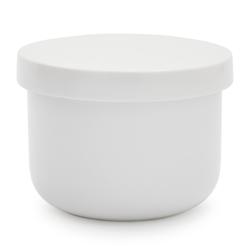
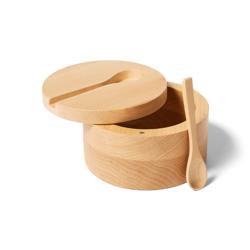
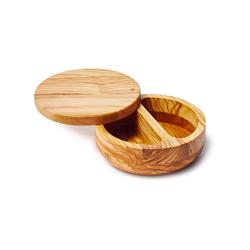
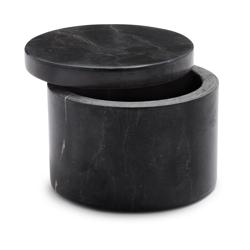
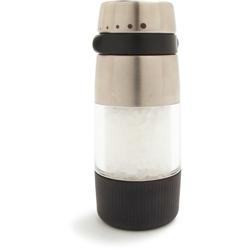
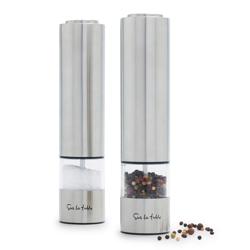
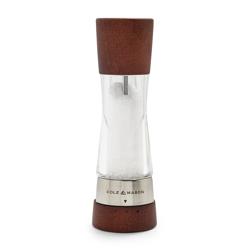
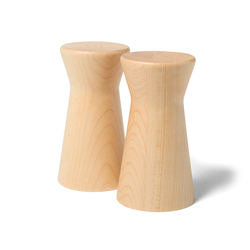
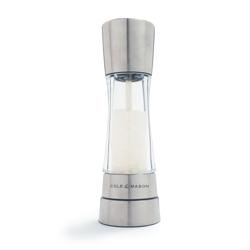
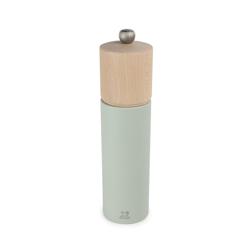
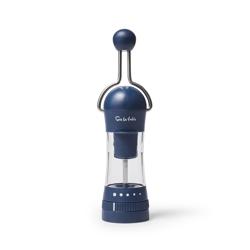
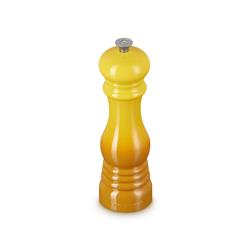
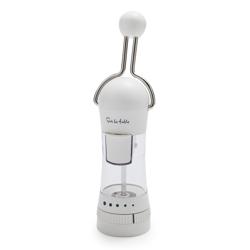
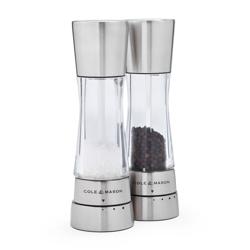
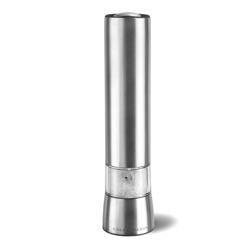
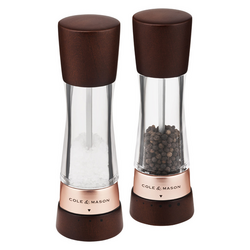
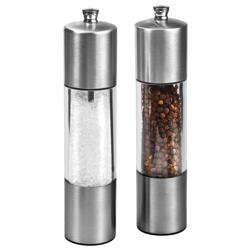
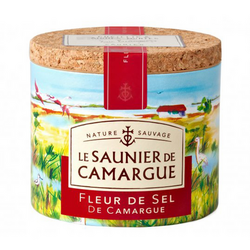
Salt dispensers hold salt close at hand and make it easier to season food at the stove or table. Traditional shakers sprinkle fine salt through holes in a lid, adjustable dispensers change the flow with a turn of the top and measured-dose designs release a set portion with each press. Salt cellars and crocks offer a different kind of control, giving you room to take a pinch or fill a measuring spoon. The best fit depends on the salt you use, where you season food and how much control you want over each addition. A small shaker makes sense beside a breakfast plate, where a light scattering over eggs may be all you need. A roomy cellar is useful near a prep area, whether you’re seasoning vegetables before roasting or measuring salt into bread dough. Fine table salt generally moves easily through small shaker holes, while larger kosher crystals need wider openings. Delicate finishing flakes are better suited to a container that lets you lift them out without crushing their texture. For coarse salt intended for grinding,
salt grinders break down crystals as you season; the mechanism should be designed specifically for salt, which can corrode unsuitable metal components. Adjustable shaker tops can be helpful when the same container moves between cooking and serving, although the opening still needs to suit the grain size. Measured dispensers offer repeatable portions, but the amount released depends on the design and may vary with the salt’s texture or how fully the chamber fills. They should not replace measuring spoons or a scale when a recipe calls for a precise quantity. Across these styles, an easy-to-hold shape and predictable flow matter more than an elaborate mechanism. A dispenser that releases salt without a vigorous shake helps you avoid a concentrated patch on a sliced tomato or an unexpectedly salty spoonful of soup.
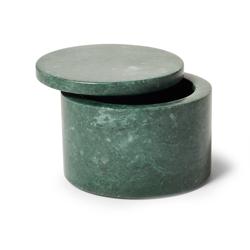
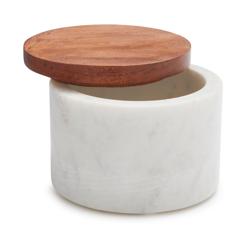
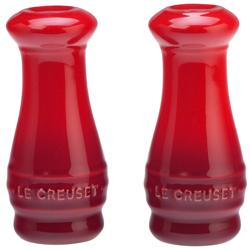
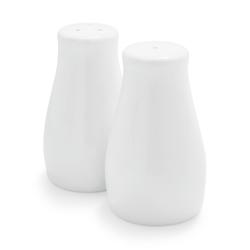
Materials influence both how a salt dispenser looks and how it fits into everyday kitchen routines. Glass makes the fill level visible, so it’s easier to notice when a refill is needed before sitting down to dinner. Its smooth surface is generally easy to clean, though it can chip or break if knocked against a sink. Ceramic offers a comfortable weight and a wide range of finishes that can coordinate with dinnerware or sit quietly beside everyday cooking utensils. A glazed interior is useful for cleaning, while care around edges and lids helps prevent chips. Stainless steel gives a dispenser a streamlined appearance and stands up well to frequent handling, but it is not immune to corrosion, especially when salty residue stays damp. Marble and other stone containers bring substantial weight to the counter, making them less likely to slide during use, though porous surfaces may require particular care and protection from acidic splashes. Wood adds warmth and can be pleasant to handle, but it generally needs gentle cleaning rather than soaking. Beyond the body material, the lid, closure and dispensing parts deserve attention. A secure lid helps prevent spills when a shaker passes around the table, while a covered cellar keeps crumbs and cooking splashes away from the salt. A closing top is not necessarily airtight; a well-fitting gasket or an explicitly airtight seal offers better protection from humid air. That distinction matters in a kitchen where simmering pots and a frequently running dishwasher create moisture. Keeping salt away from rising steam also helps reduce clumping and blocked openings. Care requirements can differ between the container and its lid, so dishwasher-safe construction should be confirmed rather than assumed. After washing, every part needs to dry completely before refilling. Salt left against damp threads or inside a wet dispensing mechanism can cake into a stubborn crust, making even a well-designed container harder to use.
Size and shape make a noticeable difference once a salt dispenser becomes part of your daily routine. A compact shaker leaves room for serving dishes on a crowded table, while a wider container can be more convenient for cooks who regularly reach for a generous pinch. Capacity should suit how often you cook and how much counter space you want to devote to seasoning. A large opening makes refilling less fiddly and helps keep stray crystals off the countertop; a removable top also makes it easier to inspect and clean the inside. For cellars, enough room for your usual measuring spoon can be more useful than extra height. For shakers, a stable base and comfortable grip help when hands are busy or several people are sharing the table. Someone who finds twisting small caps difficult may prefer a larger lid or a simple opening mechanism, while a lightweight dispenser may be easier to pass than a heavy stone container. Push-button designs still require pressure, so ease of operation depends on the person as well as the mechanism. In a busy household, a closed dispenser can be practical for shared use, while a cellar with a dedicated spoon keeps fingers out of the salt during food preparation. Appearance has a role, too: a quiet neutral finish can move from a casual lunch to a dinner gathering, and a clear container makes it easy to distinguish salt from nearby seasonings. A salt dispenser can also be a thoughtful housewarming or host gift, especially when chosen around how the recipient cooks rather than looks alone. An enthusiastic baker may appreciate easy measuring access, while someone who enjoys lingering over dinner may get more use from a comfortable table shaker. During the cooler months, when roasted vegetables, hearty soups and shared meals come around more often, these small details become especially useful. The right salt container earns its place through straightforward handling, suitable storage and a style that feels at home wherever food is prepared or served.