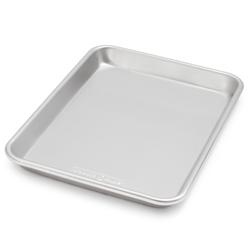
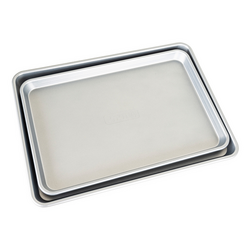
A quarter sheet pan is a compact, rimmed baking pan that typically measures about 9 by 13 inches, with sides about 1 inch high. Its size makes it useful for small-batch baking, roasting vegetables and reheating foods that benefit from a crisp surface. Think of a few chocolate chip cookies with room to spread, broccoli florets with browned edges or a slice of pizza whose crust needs a little time in the oven. For someone cooking alone or preparing dinner for two, a quarter sheet baking pan offers a practical amount of cooking space without the bulk of a larger tray. It also earns its place in a busy household when one portion needs to stay separate, a side dish finishes at a different time or a small batch of biscuits accompanies a larger meal. The shallow rim helps contain oil, crumbs and cooking juices while leaving food exposed to the oven’s heat. That shape distinguishes a quarter sheet pan from a deeper 9-by-13-inch baking dish: similar dimensions do not mean the same capacity, so recipes intended for deep dishes are not automatically suitable for a sheet pan. Size matters beyond the recipe, too. Quarter sheet pans can work well in compact ovens, apartment kitchens and RV kitchens, but fit depends on the appliance and the pan’s actual outside measurements. Rolled rims and handles may extend beyond the baking surface, and the oven needs sufficient clearance for proper airflow. Checking those dimensions is especially important for toaster ovens, where usable space varies considerably. For larger batches,
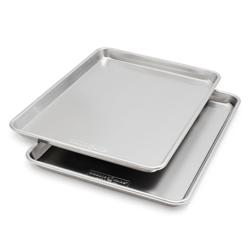
Half Baking Sheets offer roughly twice the surface area of a standard quarter sheet pan. The smaller format remains useful alongside larger bakeware, giving a handful of asparagus, a portion of fish or a few pastries their own space. It is also easier to maneuver when the oven is already holding another dish, provided the pans fit comfortably and food has enough room to cook rather than steam.
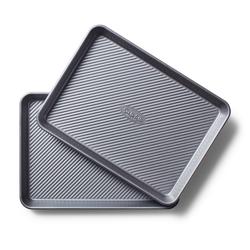
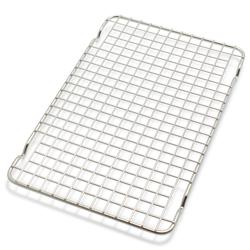
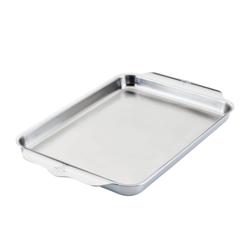
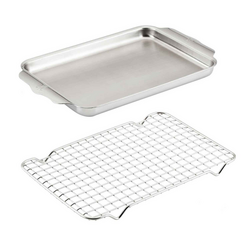
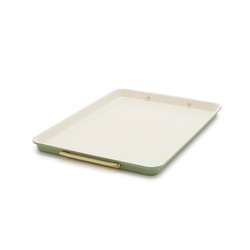
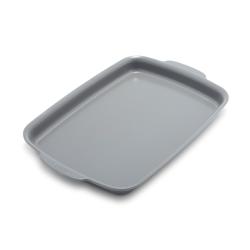
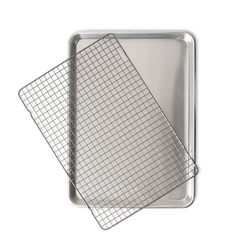
Material and construction influence how a quarter sheet pan heats, browns food and holds up to regular use. Aluminum conducts heat efficiently and is relatively lightweight, making it a familiar choice for everyday cookies, roasted vegetables and other oven tasks. Uncoated aluminum develops marks and discoloration over time, which do not necessarily affect its usefulness, although prolonged contact with acidic ingredients can react with the surface. Aluminized steel combines a steel base with an aluminum-based surface layer, offering a different balance of strength, weight and heat performance. Stainless steel resists corrosion and does not react readily with acidic foods, though it generally conducts heat less efficiently than aluminum. No single material is best for every kitchen; the right balance depends on what gets cooked most often and how the pan will be handled. A thicker metal body and reinforced rim can help a pan resist bending and warping, especially with frequent use, but weight alone does not tell the whole story. Construction, oven temperature and sudden temperature changes also matter. Surface finish deserves equal attention. A nonstick quarter sheet pan can make delicate cookies and sticky glazes easier to release, while an uncoated surface suits cooks who prefer bare metal and are comfortable using parchment or greasing the pan as a recipe directs. Darker surfaces often encourage faster browning, something worth considering for cookies with pale bottoms or baked goods that spend longer in the oven. Nonstick coatings have their own temperature limits and utensil recommendations, so the manufacturer’s instructions should determine whether a pan is suitable for high heat or broiling. Rim design affects everyday handling as well. A sturdy edge gives an oven mitt something secure to grip, while a shallow profile makes it easier to lift cookies with a spatula. A compatible oven-safe rack can expand the pan’s uses by raising food above collected drippings, but both the rack’s dimensions and its heat rating need to suit the task.
The appeal of quarter sheet pans extends beyond baking a smaller batch. Their compact footprint makes them convenient prep trays for carrying chopped vegetables to the stove, gathering ingredients for a recipe or holding shaped dough before it goes into the oven. In the refrigerator, a tray can keep covered portions together or catch drips beneath a separate container, provided there is enough shelf space. Keeping raw meat separate from ready-to-eat foods remains essential, and a pan used for raw ingredients needs thorough cleaning before another task. At the table, a cooled pan lined with parchment can provide a casual way to serve sandwiches or snacks, with a trivet underneath to protect the surface if the pan is still warm. For baking, the smaller format is useful when testing a few cookies before committing the rest of the dough or making a modest portion of focaccia. Recipe yield still needs to match the pan’s usable area and depth; a full batch intended for a larger sheet should not simply be crowded onto a smaller one. Care is straightforward but depends on the material and finish. Letting a hot pan cool before washing helps limit thermal stress, and mild dish soap with a soft sponge is a sensible starting point when the manufacturer recommends hand-washing. Abrasive cleaners and metal tools can damage nonstick finishes, while dishwasher detergents may discolor some metals. Thorough drying helps protect the pan, particularly around rims where water can collect. Parchment can simplify cleanup for many baking tasks when used within its stated temperature limits, and a protective layer between stacked pans can help prevent scratches. This combination of everyday usefulness and manageable size makes a quarter sheet pan a thoughtful housewarming gift or a practical addition for a new baker, a smaller household or someone who prefers cooking modest portions. It can slip into a bakeware stack without demanding much storage space, yet remain useful for everything from breakfast biscuits to a small tray of roasted potatoes.