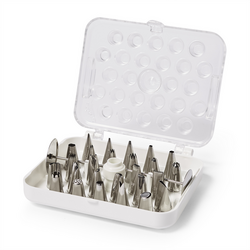
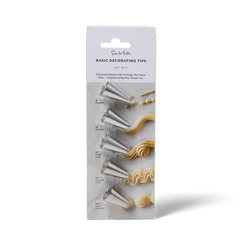
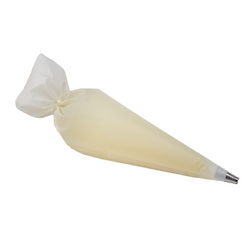
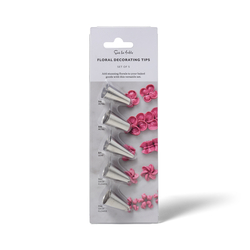
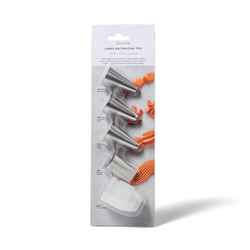
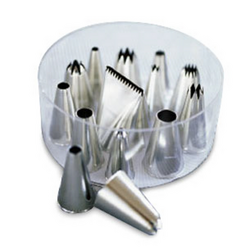
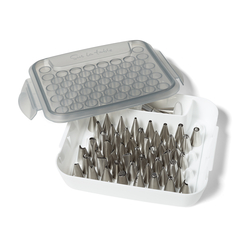
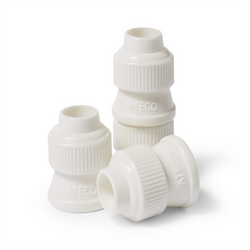
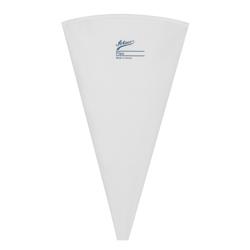
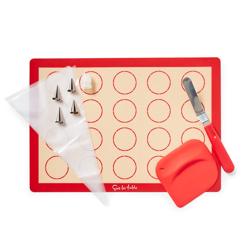
Piping tools are baking accessories used to shape and dispense frosting, icing, dough and fillings for cakes, cupcakes, cookies and pastries. The main components are pastry bags, piping tips and couplers: the bag holds the mixture, the tip shapes it as it leaves the bag and a compatible coupler lets you change tips without emptying the contents. Together, they give home bakers and experienced decorators more control over details, from a simple buttercream border to a tray of cream-filled éclairs. Different tip shapes suit different finishes. Round piping tips create dots, lettering and smooth lines, while star tips add ridged swirls, shells and rosettes. Petal tips shape ribbons, ruffles and individual flower petals, and leaf tips make the pointed accents that finish a floral design. The opening size matters as much as the shape. A small round opening suits a name written across a birthday cake; a larger one makes generous dollops or fills pastry shells more easily. For cupcakes with tall, defined swirls, a larger decorating tip gives frosting room to flow without requiring several narrow passes. Cookie decorating often calls for finer openings that offer control around curved edges and small details. A few familiar shapes can cover everyday baking, while a broader assortment gives decorators more ways to vary texture and scale. Piping also has a practical role beyond decoration. Pastry bags help portion macaron batter, shape choux dough and place filling neatly inside sandwich cookies. In savory cooking, they can add a tidy swirl of filling to deviled eggs or portion a smooth cheese mixture into small pastry cups. These uses make piping tools useful for anyone who enjoys baking for family, preparing food for gatherings or giving a familiar recipe a more finished appearance. A piped border can frame a cake without covering the whole surface, and a row of soft cream peaks can make a simple tart feel ready for the table.
Materials, size and compatibility help determine how comfortable piping tools feel in use. Disposable plastic pastry bags offer convenient cleanup, particularly for projects that involve several frosting colors or smaller amounts of icing. Bag thickness can affect handling: a sturdy bag is generally better suited to dense buttercream than a very thin one, though any bag can split if pushed beyond its intended use. Reusable pastry bags may be made from silicone or coated fabric, with flexibility and surface texture varying by construction. Some bakers prefer the supple feel of silicone; others like the grip and structure of a fabric bag. The best fit is one that feels manageable in your hand and suits the mixtures you use most often. Smaller bags can be easier to control for lettering, fine accents and short decorating sessions. Larger bags hold more filling for repeated cupcake swirls or batches of pastries, but a full bag also means more weight to support. Leaving room at the top makes the bag easier to close and handle. Stainless steel piping tips are valued for their durability and well-defined openings, while plastic tips provide another option for shaping frosting. With either material, smooth edges and an undamaged opening help produce a consistent pattern. Couplers need to match the size and style of the tips they hold; a standard coupler is not necessarily compatible with oversized decorating tips. Checking that relationship matters when building a collection or adding new shapes to familiar tools. Not every task requires a coupler, since many tips can sit directly inside a properly fitted bag, but interchangeable tips are especially helpful when one frosting color appears in several patterns. Sets can provide a coordinated starting point, while a focused selection may suit bakers who return to the same finishes. For a frequent cupcake baker, comfortable bags and a handful of useful shapes may get more use than an extensive collection of intricate tips. Someone drawn to detailed celebration cakes may appreciate more specialized shapes and organized storage.
Good piping tools should suit both the baking project and the cleanup that follows. Frosting consistency has a strong influence on results, even with a well-chosen tip: soft buttercream may lose its ridges, while an overly firm mixture can be tiring to squeeze. Smooth fillings generally flow more predictably through narrow openings than mixtures with pieces of fruit, nuts or chocolate. For those textures, a wider opening may be more practical, depending on the recipe and the size of the pieces. These are useful considerations when choosing tools for airy whipped cream, firm cookie fillings or rich mashed potatoes rather than frosting alone. Care requirements vary by material, so the manufacturer's instructions should determine whether a bag, tip or coupler is dishwasher safe or needs to be hand-washed. Small openings and grooves deserve particular attention because icing can dry inside them, making the next decorating session harder than it needs to be. A small cleaning brush can help reach narrow spaces, and reusable bags should be clean and completely dry before storage. Keeping tips separated and protected helps preserve their shape and makes it easier to find the opening you want without searching through a drawer. Reusable bags also benefit from occasional checks for worn seams, cracks or damage around the cut end. For newer bakers, a manageable assortment encourages practice without making every project feel like a major undertaking. More experienced decorators may value dependable replacements for frequently used shapes or bags sized for larger batches. Piping tools also make thoughtful gifts for someone who brings cupcakes to gatherings, decorates cookies with family or enjoys learning pastry techniques. During the cooler months, they fit naturally into afternoons spent baking and preparing desserts to share. Bakers who move between decorated cakes and pastry desserts can pair these accessories with
Pie Tools for projects that combine a crisp crust with a piped cream topping. Whether the finish is a few restrained dollops or an elaborate floral border, tools matched to the task help make decorating more comfortable, repeatable and enjoyable.