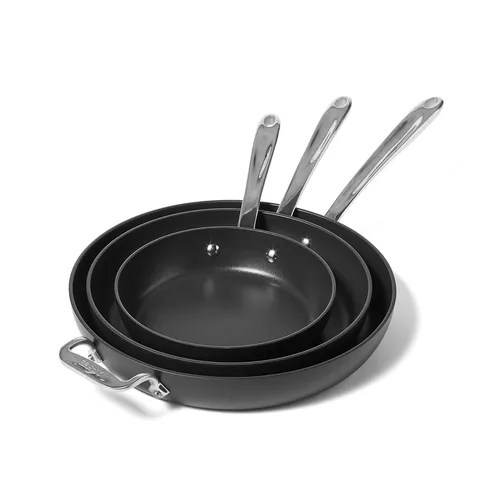
Clad Cookware

Explore clad cookware, which combines bonded layers of metal to help distribute heat evenly. Compare the selection by size, shape and weight to find the right fit for the meals you make, and check each item’s care requirements and stovetop compatibility before choosing.

Read More
Sort by:
Clad cookware combines bonded layers of different metals to bring efficient heat conduction and a durable cooking surface into the same pan. In fully clad cookware, those layers extend across the base and up the sides, helping distribute heat throughout the pan rather than only at the bottom. A common construction places an aluminum core between layers of stainless steel; other designs incorporate copper or additional metal layers. Aluminum and copper conduct heat well, while a stainless steel cooking surface provides a durable, nonreactive place to brown meat, simmer tomato sauce or reduce a splash of wine. Together, these materials help limit hotspots and support more consistent cooking, though results still depend on the burner, pan thickness and heat setting. That balance is especially useful when golden onions need an occasional stir or a delicate sauce needs a controlled simmer. With clad aluminum pans, the aluminum layer helps spread heat without requiring food to touch bare aluminum. Three-layer construction is often called tri-ply, while other designs use five or more layers. Layer count alone does not determine performance: the thickness and arrangement of the metals also influence how quickly a pan heats, how steadily it holds heat and how heavy it feels. A lighter construction may respond readily when the burner is turned down, while a heavier pan can offer greater heat stability as ingredients are added. Fully clad construction also differs from cookware with a bonded base, where the heat-conducting layers are concentrated underneath the cooking vessel. Both designs can heat effectively, but their sidewall construction and response may differ. An uncoated stainless steel interior is not inherently nonstick, although it works well for browning and building the flavorful browned bits used in pan sauces. Clad cookware with a nonstick cooking surface offers a different experience, with coating-specific care requirements. The right construction depends on what gets cooked most often and how the pan feels in everyday use.

The shape and size of clad cookware matter just as much as its materials. A skillet with sloped sides leaves room for turning a fish fillet, sliding a spatula beneath pancakes or tossing sautĂ©ed vegetables. A sautĂ© pan with straighter sides contains liquid and ingredients more readily, making it useful for chicken finished in sauce or a generous portion of greens that cooks down into a smaller volume. Saucepans suit oatmeal, custard and small batches of soup, while larger pots give pasta and broth room to move. Capacity tells only part of the story: a wide cooking surface lets mushrooms sit in a single layer rather than pile up and steam, while a narrower vessel may be more comfortable for warming a small portion. For someone cooking for one or two, manageable cookware that fits the usual serving size can be more useful than a collection of oversized vessels. Frequent hosts may appreciate broader pans, deeper cooking vessels and lids that help control evaporation. Fit also includes the stove itself. A pan should sit securely on the cooking surface, with a base suited to the burner size. Induction compatibility depends on a magnetic base or exterior layer, so it should be confirmed for each piece rather than assumed from the word “clad.” Handle shape, balance and overall weight deserve attention, particularly when lifting a full pan or moving dinner from stove to table. A helper handle can make a larger vessel easier to carry with both hands, though handles may still become hot. Storage is another practical consideration, especially in kitchens where long handles and tall lids share limited cabinet space. Individual pieces can fill a specific gap, while a coordinated set can suit someone establishing a kitchen or replacing mismatched cookware. Set contents deserve a close look because lids may count toward the total number of pieces. As a wedding or housewarming gift, clad cookware feels most thoughtful when its size, weight and cooktop compatibility match the recipient’s kitchen and cooking habits.

Clad cookware fits comfortably into everyday routines, from browning a quick dinner to finishing a dish in the oven, provided the cookware’s stated use and temperature limits are followed. Oven safety varies by construction, coating, handle and lid, and a glass lid may have a different limit from the pan beneath it. Broiler suitability should also be checked separately. On the stovetop, moderate heat is often enough for routine cooking because conductive metal layers help move heat through the pan. Brief, controlled preheating and a suitable amount of oil support browning on uncoated stainless steel without relying on the highest burner setting. Patting ingredients dry and leaving space between them helps reduce steaming. Food may initially cling to stainless steel, then release more easily as a browned crust develops; forcing a turn too early can tear a delicate fillet or leave part of the crust behind. After cooking, a little liquid can loosen browned bits for a sauce and make later cleanup easier. Care is straightforward, but small habits make a difference. Allow the cookware to cool before washing, since sudden temperature changes can stress the metal and contribute to warping. Warm water, dish soap and a nonabrasive sponge are a useful starting point, with soaking for stubborn residue. Dishwasher suitability varies, and hand-washing can help preserve finishes and exposed edges even when dishwasher use is permitted. Mineral marks, rainbow discoloration and cooked-on oil do not necessarily mean a stainless steel pan is damaged; a manufacturer-approved cleaner can help address those marks without harsh scraping. Salt should dissolve promptly in cooking liquid rather than sit against a stainless steel surface, where concentrated deposits can contribute to pitting. For coated interiors, utensils and cleaning tools should meet the coating’s care requirements. Protecting surfaces when stacking cookware also helps prevent unnecessary scratches. Stainless steel is durable, but no pan is immune to overheating, abrasion or misuse. With appropriate handling, clad cookware can be a dependable part of the kitchen for both confident home cooks and those building their skills, supporting familiar meals while leaving room to try something new.
Read More

FAQ