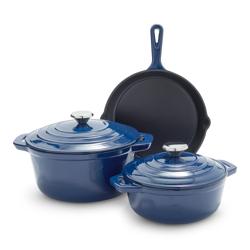
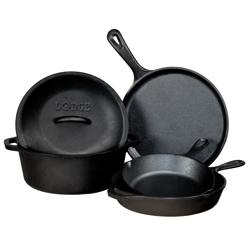
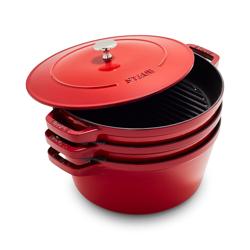
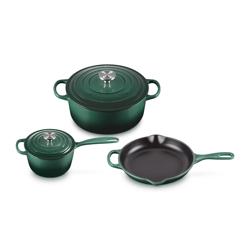
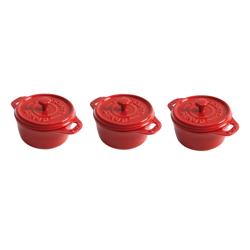
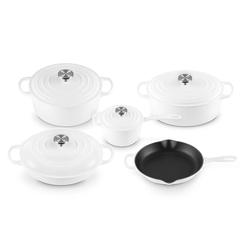
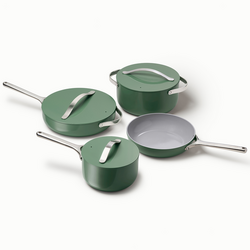
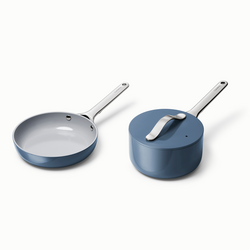
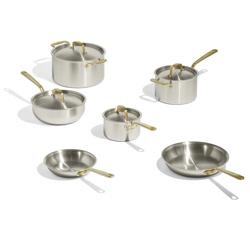
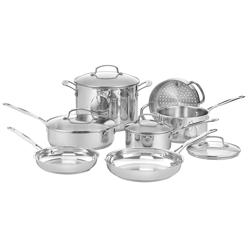
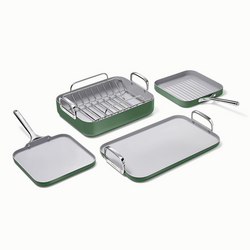
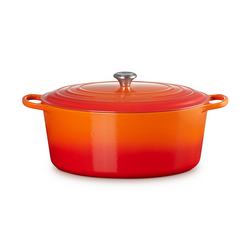
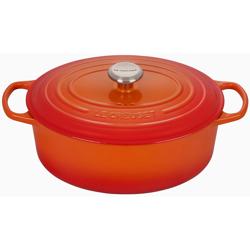
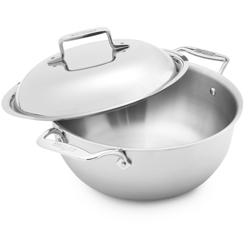
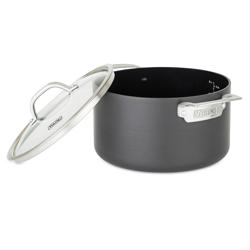
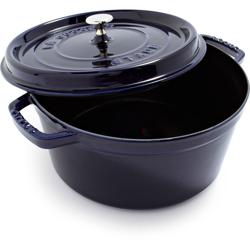
Cast iron Dutch oven sets combine a lidded cast iron pot with additional Dutch ovens or complementary cookware for braising, simmering and baking. Their defining strength is heat retention: once heated, cast iron holds warmth well, supporting a steady simmer for beans, a gentle braise for short ribs or a deeply browned crust on homemade bread. A set can give you different capacities for different meals, so a small batch of rice does not need the same pot as a family-size stew. Some sets focus on covered pots, while others include a skillet for searing, sautéing or preparing a side dish. Consider the actual cooking vessels included rather than the piece count alone, since lids may count as separate pieces. The most useful combination fits the way you cook throughout the week. A smaller Dutch oven can handle lentils, sauces or dinner for one or two, while a larger vessel gives vegetables and broth room to mingle without crowding the pot. Leave enough space above the ingredients for stirring and bubbling, especially when making soups or dishes that expand as they cook. Shape matters, too. Round Dutch ovens generally fit round burners well and make sense for everyday stovetop cooking. Oval shapes can accommodate longer cuts of meat or a whole chicken, though their bases may extend beyond a smaller burner. A broad cooking surface gives ingredients more room to brown in batches, while taller sides help contain liquids during slow cooking. Think about storage space as well as meal size: a pot should fit comfortably on the cooktop, inside the oven and on a shelf sturdy enough to support its weight. Coordinated finishes offer a consistent look, but practical details such as comfortable handles, manageable weight and useful sizes make the bigger difference in daily cooking. A well-chosen set lets several parts of a meal come together at once, with a main dish simmering in one vessel while a sauce or side cooks in another.
The choice between enameled and traditional seasoned cast iron affects both cooking and upkeep. Enameled cast iron has a glass-based coating that protects the iron and does not require seasoning. Its nonreactive cooking surface is especially useful for tomato sauces, wine-based braises and other dishes with acidic ingredients. Traditional cast iron relies on a maintained layer of seasoning to protect its surface and help food release. That seasoning can improve with repeated use, but prolonged cooking with acidic ingredients may weaken it, particularly when the coating is new or uneven. Neither surface should be treated as a guarantee that food will never stick. Moderate heat, an appropriate amount of cooking fat and enough time for ingredients to brown before turning all help. Cast iron heats more slowly than lighter cookware, so gradual heating gives the vessel time to warm without unnecessary heat stress. Once hot, it often needs less burner heat than expected to maintain a simmer. That makes a Dutch oven useful for recipes that begin with browning onions or meat and continue with a longer, covered cook. A fitted lid helps limit moisture loss, though it does not seal the pot like a pressure cooker. For bread baking, a covered Dutch oven can hold steam released by the dough, encouraging crust development; follow the cookware maker’s directions before preheating an empty vessel. Many cast iron Dutch ovens work on gas, electric and induction cooktops, but compatibility should be confirmed for the complete set. On glass or ceramic surfaces, lift the pot rather than sliding it, and make sure the base is clean. Check oven-temperature limits for the vessel, lid and knob, since those limits may differ. Broiler use also requires explicit manufacturer approval. Handles and lids become hot during cooking, so keep dry oven mitts nearby and plan a clear landing spot before moving a full pot. For larger vessels, generous handles and enough clearance for a secure two-handed grip are particularly important.
Care is straightforward when it becomes part of the cooking routine. Let cast iron cool before washing, and avoid moving a hot pot directly into cold water; sudden temperature changes can damage the cookware or its enamel. For enameled interiors, warm water, mild dish soap and a soft sponge are a sensible starting point. Loosen stubborn residue with a soak or another cleaning method approved by the manufacturer rather than reaching for metal scrapers or abrasive cleaners. Even when enameled cookware is labeled dishwasher safe, hand-washing is often recommended to help preserve its finish. Wash seasoned cast iron according to its care instructions, dry it promptly and apply a light coating of cooking oil when needed to maintain the surface. Avoid long soaking and storing it while damp, which can encourage rust. Wooden, silicone or other manufacturer-approved utensils help protect cooking surfaces, especially enamel. Cast iron is durable, but enamel can chip if struck or dropped, so lower lids gently and use protective layers if pieces are stacked. Store cookware dry, with lids positioned to allow any remaining moisture to escape. These habits matter most with cookware that sees frequent use, from a pot of beans prepared for several meals to a braise carried straight from the oven to the table. Use a sturdy trivet underneath, and remember that the pot stays hot well after cooking ends. For a broader selection of coordinated pots and pans, explore the
Cast Iron Cookware Set assortment alongside Dutch oven-focused options. As a gift, a Dutch oven set can suit newlyweds, someone setting up a kitchen or a home cook who enjoys bread baking and slow-cooked meals. Choose with the recipient’s kitchen in mind: useful capacities, cooktop compatibility and comfortable handling matter more than the largest possible collection. With thoughtful care and a combination that fits everyday meals, cast iron Dutch oven sets can remain dependable cooking companions for years.